

Introduction
Kitchen Color Ideas can change the look and feel of your entire kitchen. Whether you have a small kitchen or a large one, thoughtful color choices can make the space feel brighter, warmer, more comfortable, or more modern.
When searching for kitchen color ideas, start by considering your cabinet style, natural light, kitchen size, countertops, flooring, and personal preferences. From soft neutrals to bold shades, there are many ways to create a kitchen that feels stylish while still being practical for everyday use.
How to Choose the Right Kitchen Colors
Before choosing a color, consider how your kitchen looks and how you use the space. A shade that works beautifully in a bright kitchen may look very different in a room with limited natural light.
Consider these factors:
- Natural light: Kitchen Color Ideas with plenty of daylight can accommodate a wider range of colors, while lighter shades can help brighten darker spaces.
- Kitchen size: Light colors can make a small kitchen feel more open, although darker colors can also work when balanced with good lighting and lighter surrounding elements.
- Cabinet style: The wall and cabinet colors should complement the cabinet design and finish.
- Countertops: Choose Kitchen Color Ideas that coordinate with your countertops rather than competing with their pattern or color.
- Flooring: Consider the floor when selecting cabinet and wall colors so the overall palette feels connected.
- Personal style: Choose Kitchen Color Ideas you will enjoy living with every day rather than following a trend simply because it is popular.
15 Kitchen Color Ideas to Consider
1. White Kitchen
White is a classic choice when you want a kitchen to feel clean, bright, and spacious. It works well with both traditional and modern designs.
To prevent an all-white kitchen from feeling flat, introduce contrast through natural wood, metal hardware, colorful accessories, artwork, or textured surfaces.
2. Soft Gray
Soft gray can create a calm and modern appearance without the brightness of pure white. It is a versatile neutral that works well with white countertops, natural wood, stainless steel, and a variety of accent colors.
Lighter gray shades can be particularly useful in Kitchen Color Ideas where you want a subtle, contemporary look.
3. Beige and Cream
Beige and cream can create a warm and welcoming atmosphere. These shades work especially well with natural wood, stone countertops, warm lighting, and other earthy materials.
They can also soften a kitchen that contains cooler materials such as metal or gray cabinetry.
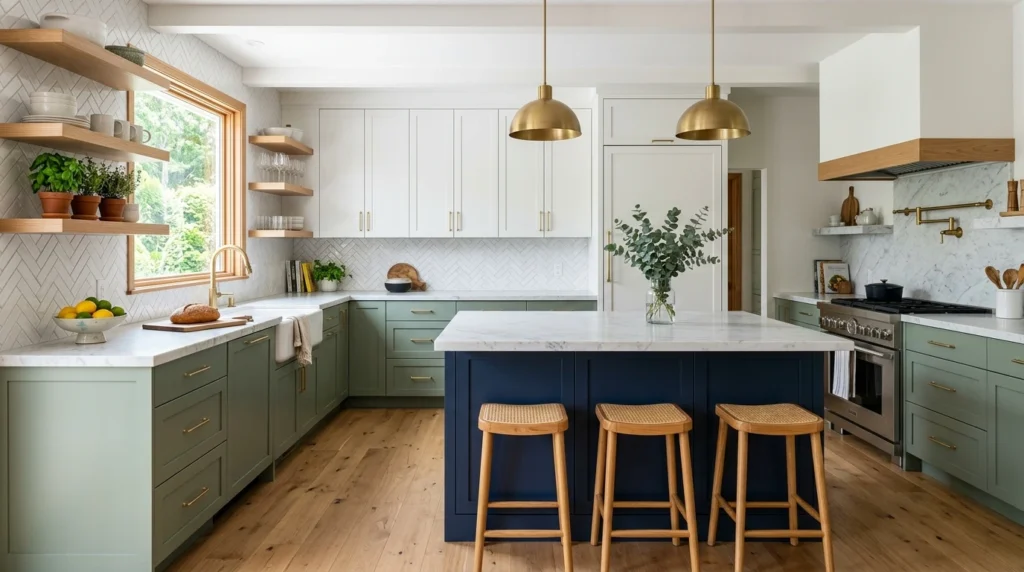
4. Sage Green
Sage green can bring a subtle natural character to a kitchen without becoming overly bright. Its muted appearance works well with white countertops, natural wood, brass or black hardware, and other neutral finishes.
It can be a good option for cabinets, an island, or selected wall areas.
5. Navy Blue
Navy blue can give a kitchen a sophisticated and dramatic appearance. It pairs well with white walls, light countertops, natural wood, and warm metal finishes such as brass.
Because navy is a deeper shade, consider balancing it with lighter surrounding elements.
6. Light Blue
Light blue can give a kitchen a fresh and relaxed feeling. It works well in spaces where you want to introduce color without making the room visually heavy.
Pair it with white, light gray, pale wood, or other soft neutral finishes for a balanced look.
7. Charcoal Gray
Charcoal gray can create a bold and modern appearance. It works particularly well when there is enough natural or artificial lighting to keep the room from feeling too dark.
Instead of using charcoal everywhere, consider using it on cabinets, an island, or another selected area and balancing it with lighter walls, countertops, or flooring.
8. Black and White
Black and white creates a strong contrast and can give a kitchen a clean, contemporary appearance.
For example, black lower cabinets with white upper cabinets can add visual interest while keeping the upper portion of the room brighter.
9. Green and White
Green and white can create a fresh and natural color combination. Green adds personality while white helps maintain a light and open appearance.
Try green cabinets with white walls or countertops, or use green through smaller accessories if you prefer a more subtle change.
10. Blue and Gray
Blue and gray can create a calm and balanced kitchen palette. You might use blue for the cabinets while keeping the walls, countertops, or larger surfaces neutral.
Muted or softer blue tones can work particularly well when paired with light gray and natural materials.
11. Warm Wood Tones
Natural wood tones can add warmth, texture, and visual depth to a kitchen. Wood can be used for cabinets, shelves, an island, or smaller accent areas.
Wood works well with white, gray, cream, green, and many other neutral shades, making it a flexible choice for both modern and traditional kitchens.
12. Terracotta
Terracotta introduces a warm, earthy character to the Kitchen Color Ideas. It can be used through floor or wall tiles, accessories, pottery, backsplash details, or selected painted areas.
Because it is a warm and noticeable color, combining it with neutral shades can help maintain balance.
13. Soft Pink
Soft pink can create a gentle and welcoming atmosphere when used thoughtfully. Rather than covering the entire kitchen in pink, consider using it for selected cabinets, accessories, artwork, tiles, or a small accent area.
It pairs well with white, cream, light gray, and natural wood.
14. Dark Green
Dark green can give a kitchen a rich and sophisticated appearance. It can work especially well on cabinetry when combined with lighter countertops, walls, or flooring.
Natural wood and warm metal finishes can also complement dark green and help create a balanced design.
15. Two-Tone Kitchen Colors
Using two main colors can add depth and visual interest without making the kitchen feel overly complicated.
For example, you could use one color for the lower cabinets and another for the upper cabinets. Another option is to use a neutral cabinet color with a contrasting kitchen island.
The key is to make sure the colors work together and that one shade remains visually dominant.
Best Kitchen Color Ideas
If you are unsure about choosing a single color, consider a combination instead.
| Color Combination | Style |
|---|---|
| White + Wood | Warm and natural |
| Navy + White | Classic and modern |
| Sage Green + Cream | Soft and calming |
| Gray + White | Simple and clean |
| Black + White | Bold and modern |
| Blue + Gray | Calm and balanced |
| Dark Green + White | Rich and elegant |
Kitchen Color Ideas for Small Kitchens
Lighter shades are often useful when you want a small kitchen to feel brighter and more open.
Consider:
- White
- Cream
- Light gray
- Soft blue
- Pale green
- Light beige
However, small kitchens do not have to be completely light-colored. A darker cabinet or accent area can still work when it is balanced with adequate lighting and lighter surrounding surfaces.
Glossy or reflective finishes can also help bounce light around the room, while keeping countertops and other surfaces visually uncluttered can make the kitchen feel more spacious.
Kitchen Color Ideas Cabinet
Cabinet color has a major influence on the overall appearance of a kitchen. Common options include:
| Cabinet Color | Best Use |
|---|---|
| White | Bright |
| Gray | Neutral |
| Navy | Dramatic |
| Sage | Natural |
| Wood | Warm |
| Dark Green | Rich |
Choose a cabinet color that works with your countertops, backsplash, flooring, hardware, and available lighting rather than selecting it on its own.
How to Combine Kitchen Colors
A simple way to create a balanced kitchen is to choose a main color, a secondary color, and an accent.
For example:
- Main color: White cabinets
- Secondary color: Natural wood island
- Accent: Black handles and lighting fixtures
This approach creates visual hierarchy and helps prevent the room from feeling either too plain or too busy.
You can also use your backsplash, flooring, textiles, and small accessories to introduce supporting colors without changing the main elements of the kitchen.
Test Your Colors Before Painting
Paint samples can look different depending on the time of day, lighting, nearby finishes, and surrounding colors.
Before committing to a large area, test your preferred shades on a reasonably sized section of the wall or on sample boards. Observe the colors during both daylight and evening lighting.
It is also useful to compare the paint with your cabinets, countertops, backsplash, flooring, and hardware before making a final decision.
Frequently Asked Questions
What is the best color for a kitchen?
There is no single best kitchen color for every home. White, gray, cream, beige, blue, and green are popular choices, but the right color depends on the kitchen’s lighting, size, materials, and your personal style.
What colors make a small kitchen look bigger?
Light colors such as white, cream, pale gray, soft blue, and light beige can help a small kitchen feel brighter and more open. Good lighting and a balanced layout are also important.
What are good colors for kitchen cabinets?
White, gray, sage green, navy, natural wood, and dark green are versatile cabinet choices. Consider the countertop, backsplash, flooring, and lighting before choosing a final color.
Should kitchen cabinets and walls be the same color?
They can be, but they do not have to be. Using different but coordinated colors can create contrast and add depth. Similar colors can also create a more continuous and understated appearance.
Are dark kitchen colors a good idea?
Yes. Dark colors can work well when the kitchen has adequate lighting and the darker elements are balanced with lighter surfaces or contrasting materials. They can be especially effective on cabinets, islands, or selected accent areas.
Conclusion
The best kitchen color ideas are those that work with your kitchen’s lighting, size, furniture, cabinets, countertops, flooring, and personal style.
Light shades can help create a bright and airy feeling, while darker colors can add depth, contrast, and character when used thoughtfully. Natural wood, muted greens, soft blues, and warm neutrals can also introduce personality without overwhelming the space.
Before making a final decision, consider the kitchen as a whole rather than choosing cabinet, wall, and accent colors separately. Testing paint samples in the actual space can help you see how the colors change throughout the day and make it easier to create a kitchen that feels comfortable, attractive, and practical.