
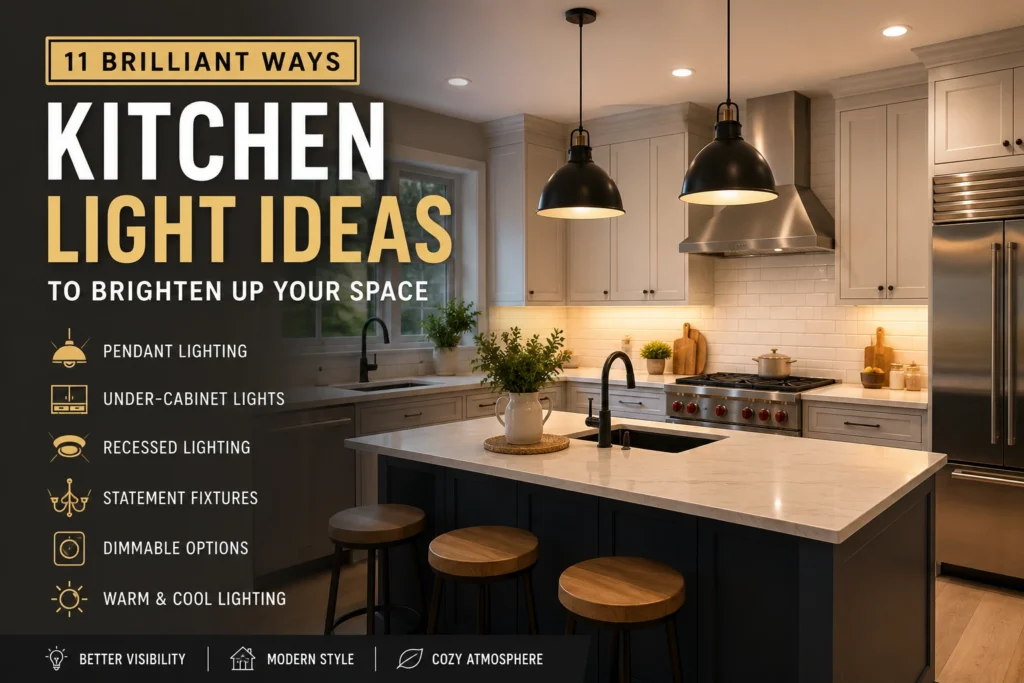

Kitchen Light Ideas: 11 Brilliant Ways to Brighten Up
The right lighting can completely change how a kitchen looks and feels. A well-lit kitchen is easier to cook in, more comfortable for everyday tasks, and more inviting when family or guests gather there. If your current lighting feels dull, uneven, or overly harsh, a few thoughtful changes can make a noticeable difference.
These kitchen light ideas can help you combine practical illumination with attractive design. From pendant lights and under-cabinet fixtures to recessed lighting and dimmers, there are options for kitchens of different sizes and styles.
Before choosing new fixtures, think about how you use the room. Food preparation, cooking, cleaning, dining, and entertaining may each require different levels and types of lighting.
Kitchen Light Ideas Should Combine Three Types of Lighting
A successful kitchen lighting plan usually combines several layers rather than relying on one ceiling fixture.
Ambient lighting provides general illumination throughout the room. Ceiling fixtures, recessed lights, and flush-mount fixtures are common choices.
Task lighting focuses on areas where you prepare food, wash dishes, read recipes, or complete detailed work. Under-cabinet lighting is particularly useful because it can illuminate countertops while reducing shadows.
Accent lighting adds visual interest and can highlight cabinets, shelves, artwork, architectural features, or decorative objects.
Combining these three layers can make a kitchen both more functional and more visually balanced.
1. Install Pendant Lights Over an Island
Pendant lights are a popular choice for kitchen islands because they can provide focused illumination while also acting as a decorative feature.
Choose fixtures that complement the overall kitchen style, whether it is modern, traditional, farmhouse, industrial, or minimalist.
For a long island, several smaller pendants can create a balanced arrangement. A single larger fixture may work better over a smaller island, depending on its size and shape.
Make sure the fixtures are positioned at an appropriate height so they provide useful light without obstructing views across the kitchen.
2. Add Under-Cabinet Lighting
Under-cabinet lighting is one of the most practical ways to brighten kitchen countertops. It places light close to the work surface and can reduce shadows created by upper cabinets.
LED strips, bars, and puck lights are common options. Choose a brightness and color temperature that works comfortably with the rest of the kitchen.
If you are installing hardwired lighting or making changes to electrical wiring, use a qualified professional where required. Plug-in or rechargeable options can be useful when you want a simpler installation.
3. Use Recessed Ceiling Lights
Recessed lights can provide clean, even illumination without adding much visual bulk to the ceiling. They can work particularly well in kitchens with lower ceilings or a simple, contemporary design.
Plan their placement around the actual work areas rather than arranging every fixture in a uniform grid. Counters, sinks, cooking surfaces, islands, and main walking paths all need to be considered.
Avoid positioning lights where your own body will constantly cast shadows over the work surface.
4. Try a Statement Chandelier
A chandelier can create an attractive focal point in a larger kitchen, particularly above a dining table, breakfast area, or spacious island.
Choose a fixture that is proportional to the room. The goal is to create visual interest without allowing the lighting fixture to overwhelm the rest of the kitchen.
A simpler chandelier can also work in a smaller kitchen when its size is carefully matched to the available space.
5. Brighten Dark Cabinet Areas
Cabinets and shelves can create dark areas that make everyday tasks more difficult. Small lights inside cabinets, beneath shelves, or in glass-front displays can improve visibility and add visual interest.
For open shelves, subtle lighting can highlight dishes, books, plants, or decorative accessories.
Inside closed cabinets, motion-activated or door-activated lights can make it easier to find items without leaving a larger light on unnecessarily.
6. Choose Warm or Cool Light Carefully
The color temperature of a bulb can affect how your kitchen looks and feels.
Warm light can create a softer and more inviting atmosphere, which may work well around dining areas and kitchens used for entertaining.
Cooler or neutral light can provide a cleaner appearance and may be useful for detailed tasks such as food preparation.
You do not necessarily need the same light color everywhere. Consider the purpose of each area and how the lighting works with your cabinets, countertops, flooring, and wall colors.
7. Add Lighting Above the Sink
The sink is often overlooked when planning kitchen lighting. A small pendant, recessed fixture, or focused ceiling light can provide useful illumination for washing dishes, cleaning, and food preparation.
If the sink is positioned beneath a window, place the fixture carefully so that it does not unnecessarily block natural light or interfere with the window.
For additional professional kitchen lighting guidance, see these kitchen lighting ideas from John Cullen Lighting.
8. Use Wall Sconces for Style
Wall sconces can add another layer of lighting without relying entirely on ceiling fixtures.
They can work well beside open shelving, near a breakfast nook, beside artwork, or on an otherwise empty wall. Choose a style that coordinates with your cabinet hardware and other metal finishes.
Sconces can be particularly useful when you want lighting that contributes to the room’s design as well as its function.
9. Make Small Kitchens Feel Brighter
Small kitchens can benefit significantly from layered lighting.
Instead of relying on one large fixture, consider combining several smaller sources, such as:
- Under-cabinet lighting
- Recessed ceiling lights
- A compact pendant
- Lighting inside cabinets
- A small wall light
Light-colored cabinets, reflective surfaces, and uncluttered countertops can also help distribute available light more effectively.
Avoid using excessively bright fixtures simply because the kitchen is small. Too much glare can make the space uncomfortable.
10. Match Lighting With Your Kitchen Style
Your lighting should complement the overall design of the kitchen rather than looking like a separate element.
For a modern kitchen, simple geometric fixtures and clean finishes can work well. A farmhouse-style kitchen may suit lantern-inspired pendants or fixtures with warmer materials. In a contemporary space, a sculptural light can become a strong focal point.
Lighting is also relatively easy to change compared with cabinets or countertops, which makes it a useful way to introduce personality without redesigning the entire kitchen.
For more home decorating inspiration, explore additional ideas on HomeNestGlow.
11. Use Dimmers When Possible
Dimmers give you greater control over the atmosphere and brightness of the kitchen.
Higher light levels can be useful while cooking, cleaning, or preparing food. Lower settings can create a softer atmosphere during dinner or when the kitchen is being used for entertaining.
Before installing a dimmer, make sure the fixture, bulbs, and switch are compatible. Some LED bulbs require specific dimmer types.
How to Choose the Right Kitchen Lighting
Before purchasing fixtures, consider the kitchen as a complete system rather than choosing each light separately.
Ask yourself:
- Which areas currently feel too dark?
- Where do I prepare and cook food?
- Does the kitchen have enough natural light?
- Are there shadows under the cabinets?
- Will the fixture fit the available ceiling or wall space?
- Does the color temperature work with the existing finishes?
- Do I need adjustable brightness?
Planning these details before buying can help you avoid fixtures that look attractive but do not provide enough useful light.
Final Thoughts
The best kitchen light ideas balance function, comfort, and style. Start by identifying the areas that need more illumination, such as countertops, islands, sinks, cabinets, and darker corners.
Then combine ambient, task, and accent lighting to create a layered approach. You do not need to replace every fixture at once. Adding under-cabinet lighting, improving one dark work area, installing a suitable pendant, or adding a dimmer can make a noticeable difference.
Good kitchen lighting should make everyday tasks easier while also helping the room feel comfortable, welcoming, and visually balanced.
FAQs
What is the best lighting for a kitchen?
There is no single fixture that works for every kitchen. A combination of ambient, task, and accent lighting usually provides the most flexibility. Recessed lights, pendants, and under-cabinet fixtures can work well together.
Are pendant lights good for kitchen islands?
Yes. Pendant lights can provide focused illumination while adding a decorative element above an island or breakfast bar. The number and size of pendants should be based on the island’s dimensions and the surrounding layout.
Is under-cabinet lighting worth it?
For many kitchens, yes. Under-cabinet lighting can reduce shadows on countertops and provide useful task lighting for food preparation and other detailed work.
Should kitchen lights be warm or cool?
It depends on the space and how you use it. Warm lighting can create a cozy atmosphere, while neutral or cooler lighting can provide a crisper appearance for detailed tasks. A combination may work well in larger kitchens.
Can I install kitchen lighting myself?
Some plug-in or rechargeable lights can be installed with minimal work. However, hardwired fixtures, new electrical connections, or modifications to existing wiring should be handled by a qualified professional where required by local regulations.
How many lights should a kitchen have?
There is no universal number. The appropriate amount depends on the kitchen’s size, ceiling height, natural light, layout, and the types of tasks performed there. Planning for even illumination and minimizing shadows is more important than simply counting fixtures.